


Alxexandre Zedig Deboine
The exaggerated, stylised and playful illustrations of Deboine is of interest in terms of stylistic exploration for the endemic animals and plants of the mandala.


Jack Tite
Looking at the level of stylisation of animals, forms and the use of texture for value and depth and the designing of forms in a space/shape. The use of basic shapes to create complex forms. The type of medium used to do this – eg vector graphics and shapes in Illustrator.

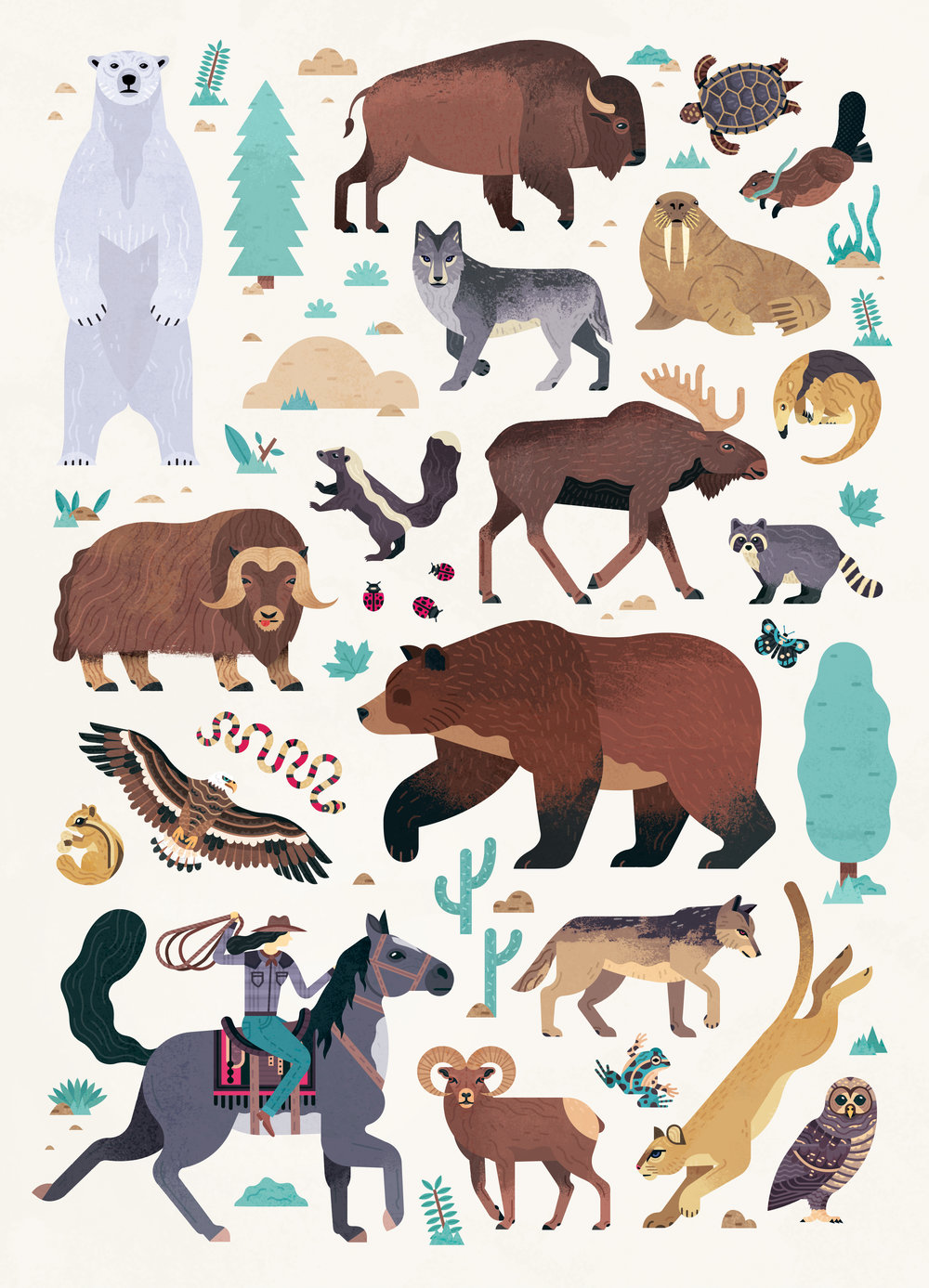


Hamish Thompson found here
NZ based designer whose highly simplified illustrations of endemic plants are of interest, and draw similarities in style to Jack Tite’s work.
OBJECTS OF INFLUENCE
Drawing on stylistic inspiration from the objects around my house that share a relationship with floral/decorative illustrations in circles. Needing to be conscious about the art styles in relation to culture and history, and be aware of this as to create my own work from a place of respect and understanding.


Working with ANZ endemic animals and plants, and considering the Maori perspectives on nature, humans and the spirit to inform part of the Symbiosis research, this influence/reference may potentially prove problematic in its own heritage/history, in that it relates to European vintage kitchenware. My intention on using European vintage art as influence, is one that observes technical depictions of flora and how they are simplified and constructed in circular patterns.


Anna Taberko
Looking at animations with looping motion. Although these examples are looping gifs of frame by frame animations, the symbiosis mandala will likely use tweening and slow motion (each circular row rotating infinitely) to add interest, and create a visual, contemplative space.


Cosmigraphics
&
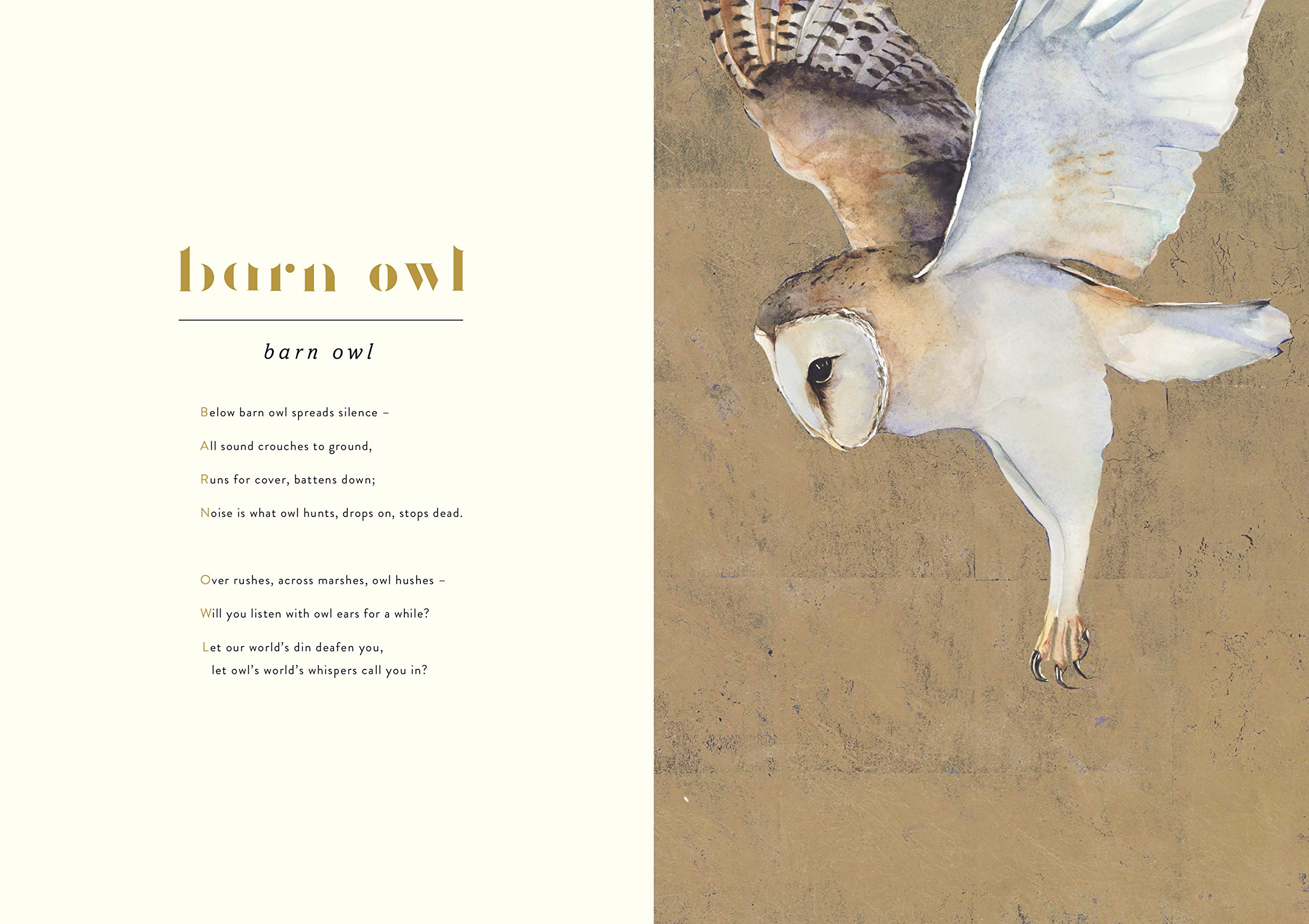
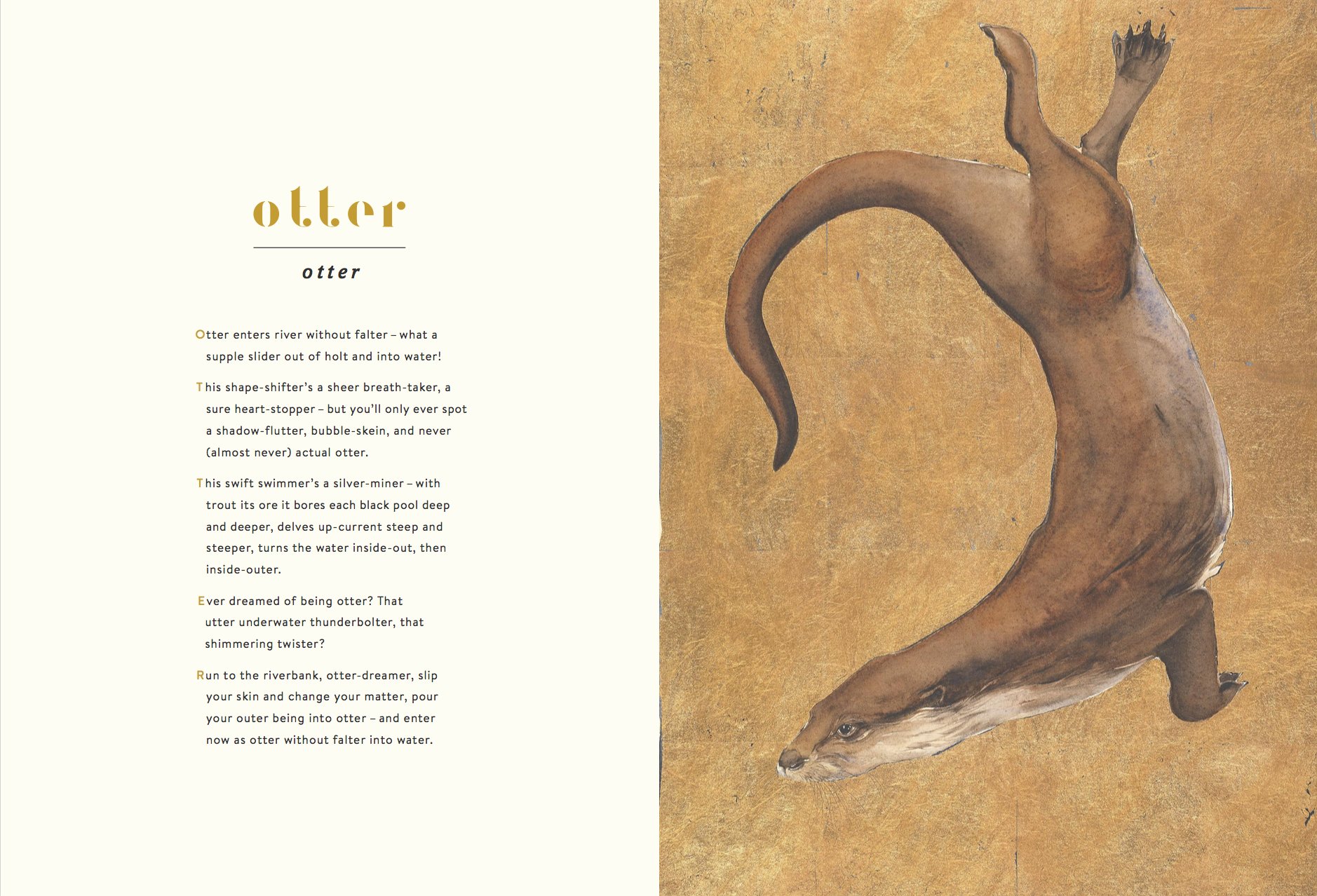
The Lost Words
Two books recommended by Tatiana – forming part of stylistic influences.
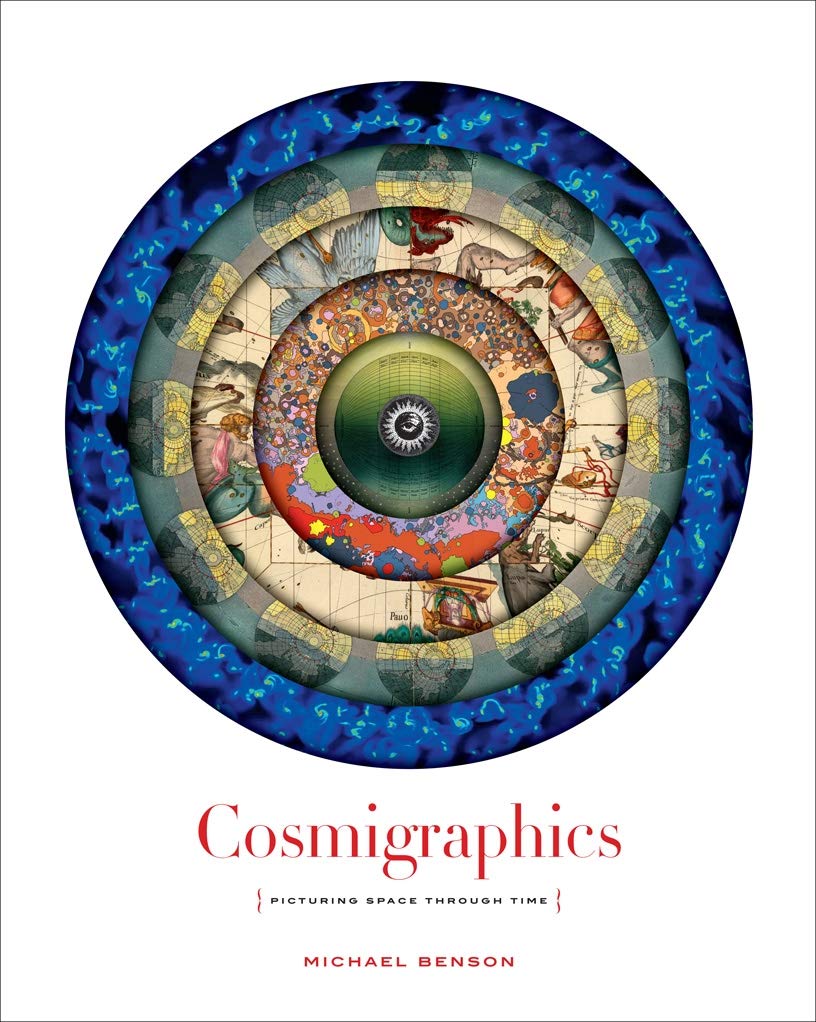
“Michael Benson tells the thrilling story of the discovery and description of the universe in a new way. Selecting artful and profound illustrations and maps, many hidden away in the world’s great science libraries and virtually unknown today, he chronicles more than 1,000 years of humanity’s ever-expanding understanding of the size and shape of space itself. He shows how the invention of the telescope inspired visions of unimaginably distant places and explains why today we turn to supercomputer simulations to reveal deeper truths about space-time.” – Google Books blurb
Suuuper interesting 🤩 – even down to the cover.
It inspires ideas on how I could arrange my own mandala, or how I might even divide each ring up, print out and have it be a physical object to slide/rotate.


“Once upon a time, words began to vanish from the language of children. They disappeared so quietly that at first almost no one noticed – until one day, they were gone. But there is an old kind of magic for finding what is missing, and for summoning what has vanished. If the right spells are spoken, the lost words might return…”–Publisher description.


Jess Johnson
“The concept of world-building lies at the center of Jess Johnson’s work, which reflects her interests in science fiction, language, technology, and concepts of consciousness. Over several years, her drawings have documented an increasingly complex fictional world; they are meshworks of cultural symbology, humanoid clones, messianic figures, and alien runes placed in architectural settings. Her drawing practice feeds into installations and collaborations in animation, music, fashion, Virtual Reality, and textile art. These additional mediums bring the world of her drawings into physical and virtual spaces, providing an immersive experience for audiences.” – from Johnson’s website


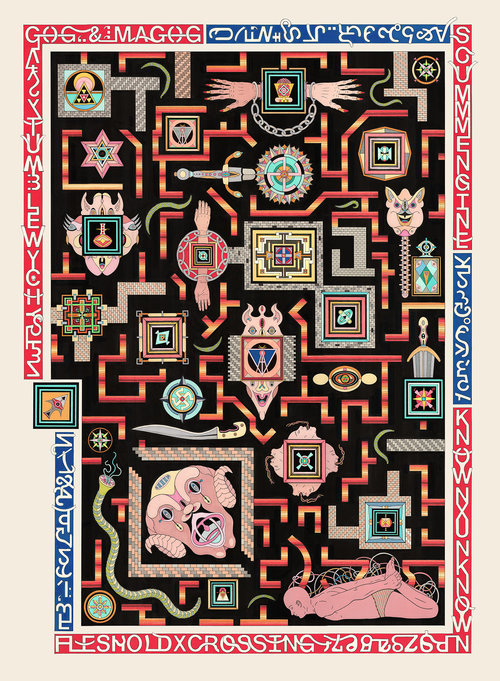
Looking at the static illustrations and how these are transformed into motion. Looking at the relationships between organic and geometric shapes and how they are designed into spaces together, as well as considering the bright colour palette used throughout.
 SYMBIOSIS